


This report applies Soft Systems Methodology (SSM) to examine how a construction product can be effectively regulated under the UK Construction Products Regulation 2011 (CPR).
This product is safety‑critical and increasing volumes of imports —combined with a complex post‑EU‑exit regulatory framework—create challenges for ensuring product compliance. The study explores issues across the supply chain, including ambiguous interpretation of the designated British Standard, limited compliance data, and a fragmented enforcement regime shared by Trading Standards (TS) and the Office for Product Safety & Standards (OPSS).
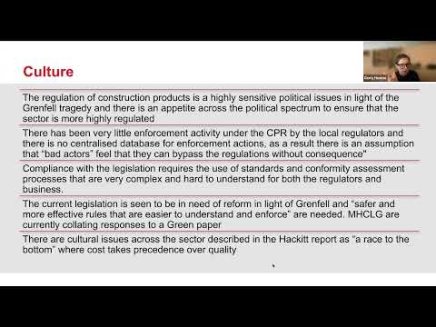
Using Checkland’s seven‑stage SSM approach, the project identifies key systemic problems: heightened political sensitivity following the Grenfell tragedy, insufficient technical capacity within TS, economic pressures on compliant UK manufacturers, and weak visibility of compliance levels at importer and manufacturer levels.
The report proposes a set of targeted regulatory interventions, including increasing TS oversight at funded ports, undertaking proactive inspections of economic operators, and introducing a test‑purchasing programme to assess conformity with the designated British Standard.
The SSM approach has enabled a richer understanding of the regulatory landscape and the underlying dynamics influencing compliance, providing a foundation for evaluating the effectiveness of the proposed interventions as further evidence is gathered.

