


Introduction: The Problem of Organisational Design in a Complex World
Across contemporary political, economic, and social landscapes, we see institutions struggling to cope with the complexity of the environments in which they operate. Political systems fail to address entrenched social issues; public services buckle under the weight of competing demands; businesses oscillate between over‑centralised control and chaotic decentralisation. These failures are not simply the result of poor leadership or inadequate resources. They reflect a deeper problem: our dominant models of organisational design are mismatched to the complexity of the world they attempt to govern (Davies 2024).
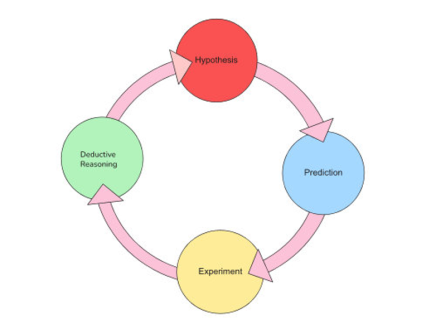
For more than a century, organisational design has been dominated by top‑down, model‑driven approaches. These approaches assume that leaders can conceptualise the organisation as a whole, define its desired end state, and then impose a structure that will reliably produce that outcome. This logic is deeply embedded in Western managerial culture, drawing on the hypothetico‑deductive reasoning that underpins the scientific method (Popper, 1959). The scientific method involves making a hypothesis that predicts an outcome, conducting an experiment, and then learning about the hypothesis through the experiment's results. Its origins lie at the birth of science, in the work of Roger Bacon (1267), Galileo(1623), Descartes (1637), Francis Bacon (1620) and Comte, and it still dominates much of our thinking. It is a reasoning that now comes naturally to people and appears as a 'common sense approach' due to the strength of the culture that has developed around it
