Resources from SysPrac26

full image

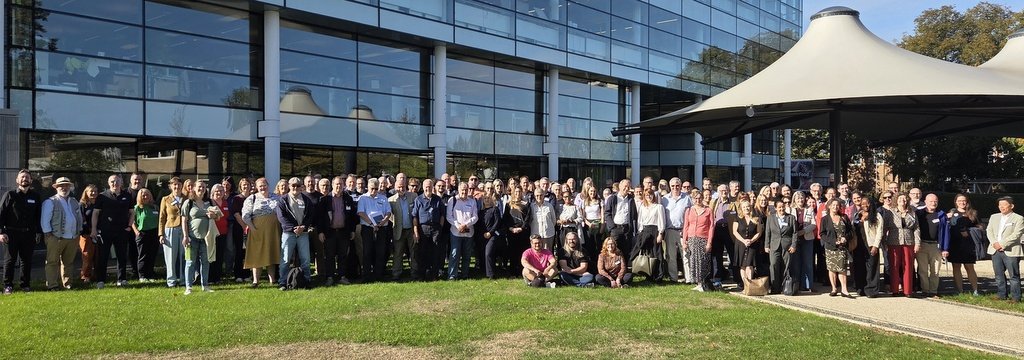
These sessions were recorded at SysPrac26 on 21st and 22nd September 2026 at Cranfield University. 

If you are not a member or are not signed in you will not be able to see some of the videos and slide sets - the icons will be grayed out. Some slide decks are also hidden from non-members because of image licensing issues.

Membership is open to all and costs £30 per annum - see top of page.
Panel Discussions

English
0:47

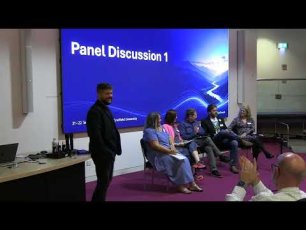
Opening Panel - learning systems practice

This panel explored how people come to systems thinking and how they make it useful in practice. Speakers from government, charities, health, construction and academia described varied journeys: some marked by a sudden moment of recognition, others by gradual learning. Across these accounts, systems thinking offered language for experiences that had previously been difficult to explain, and new...
Read more
Use with Accreditation
Speaker
English
0:47

Opening Panel - learning systems practice

This panel explored how people come to systems thinking and how they make it useful in practice. Speakers from government, charities, health, construction and academia described varied journeys: some marked by a sudden moment of recognition, others by gradual learning. Across these accounts, systems thinking offered language for experiences that had previously been difficult to explain, and new...
Use with Accreditation
English
0:42

Building Systems Thinking capability for Governments

This panel examined how systems thinking can move from growing interest across government into everyday practice. Against a backdrop of devolution, organisational change and complex public challenges, speakers described a public sector rich in skilled people and promising initiatives, yet constrained by departmental silos, separate budgets and measures, short timeframes and established ways of...
Read more
Use with Accreditation
Speaker
English
0:42

Building Systems Thinking capability for Governments

This panel examined how systems thinking can move from growing interest across government into everyday practice. Against a backdrop of devolution, organisational change and complex public challenges, speakers described a public sector rich in skilled people and promising initiatives, yet constrained by departmental silos, separate budgets and measures, short timeframes and established ways of...
Use with Accreditation
English
0:27

Review and Close: Building an inclusive systems practice community

This closing panel reflected on the conference and the community it brings together. Participants valued its warmth, openness and breadth, describing an event shaped by shared inquiry and conversation rather than a single set of expert voices. The range of perspectives—from apprentices and experienced practitioners to academics—created room to explore systems thinking in different ways and to...
Read more
Use with Accreditation
Speaker
English
0:27

Review and Close: Building an inclusive systems practice community

This closing panel reflected on the conference and the community it brings together. Participants valued its warmth, openness and breadth, describing an event shaped by shared inquiry and conversation rather than a single set of expert voices. The range of perspectives—from apprentices and experienced practitioners to academics—created room to explore systems thinking in different ways and to...
Use with Accreditation

Speaker Sessions - alphabetical order by first author

English
0:23

System Shapes, Orbital Perspectives and Spheres

Reflection from a first-year apprentice on Holism, how zooming in/out can also miss the information required as this perspective can be the same as standing behind something with the same blind spot believing we have changed vie . It leads to discuss systems as conceptual three-dimensional shapes where an orbital perspective could be required and even looking 'up' at a system may reveal...
Read more
Confidential – Members Only
English
0:23

System Shapes, Orbital Perspectives and Spheres

Reflection from a first-year apprentice on Holism, how zooming in/out can also miss the information required as this perspective can be the same as standing behind something with the same blind spot believing we have changed vie . It leads to discuss systems as conceptual three-dimensional shapes where an orbital perspective could be required and even looking 'up' at a system may reveal...
Confidential – Members Only
English
0:22

Viable Futures - Cybernetic governance, imagination and many worlds

We live in times where the end of human civilization is commonly held to be a plausible near-term prospect. It is increasingly clear how our existing institutions, structures and governance are creating and reinforcing existential threats to all life on earth. Even so, many people claim that this is inevitable, or that they can’t imagine things being otherwise. This failure of imagination risks...
Read more
Contact the Author
English
0:22

Viable Futures - Cybernetic governance, imagination and many worlds

We live in times where the end of human civilization is commonly held to be a plausible near-term prospect. It is increasingly clear how our existing institutions, structures and governance are creating and reinforcing existential threats to all life on earth. Even so, many people claim that this is inevitable, or that they can’t imagine things being otherwise. This failure of imagination risks...
Contact the Author
English
0:23

Embedding Systems Thinking at Innovate UK Business Connect: Industrial Strategy, Technology and Innovation Ecosystems

Innovate UK Business Connect (IUKBC) supports businesses across the UK to navigate the innovation landscape, connecting them with opportunities, expertise, and partners. In 2025, the UK government published its modern Industrial Strategy, identifying eight growth-driving sectors (IS-8) and their constituent frontier industries. But how do these sectors relate to one another? And how can a public...
Read more
Confidential – Members Only
English
0:23

Embedding Systems Thinking at Innovate UK Business Connect: Industrial Strategy, Technology and Innovation Ecosystems

Innovate UK Business Connect (IUKBC) supports businesses across the UK to navigate the innovation landscape, connecting them with opportunities, expertise, and partners. In 2025, the UK government published its modern Industrial Strategy, identifying eight growth-driving sectors (IS-8) and their constituent frontier industries. But how do these sectors relate to one another? And how can a public...
Confidential – Members Only
English
0:19

Governance of Complex Projects

Good governance is key to establishing a successful project. Large projects operate in complex environments and complexity is important. It must be managed through the use of appropriate tools, known as problem structuring methods (PSMs). A tool that is particularly applicable to organisational evaluation is the viable system model (VSM) and its application to governance informs this paper. It is...
Read more
Contact the Author
English
0:19

Governance of Complex Projects

Good governance is key to establishing a successful project. Large projects operate in complex environments and complexity is important. It must be managed through the use of appropriate tools, known as problem structuring methods (PSMs). A tool that is particularly applicable to organisational evaluation is the viable system model (VSM) and its application to governance informs this paper. It is...
Contact the Author
English
0:17

Exploring Systems Thinking in Supply Chain Management

Supply chains are operating in an increasingly complex environment shaped by disruption, geopolitical uncertainty, sustainability and Net Zero pressures, changing regulation, resource constraints and evolving stakeholder expectations. Yet many supply-chain challenges are still approached through relatively linear models of cause, effect, prediction and optimisation. This presentation explores the...
Read more
Use with Accreditation
English
0:17

Exploring Systems Thinking in Supply Chain Management

Supply chains are operating in an increasingly complex environment shaped by disruption, geopolitical uncertainty, sustainability and Net Zero pressures, changing regulation, resource constraints and evolving stakeholder expectations. Yet many supply-chain challenges are still approached through relatively linear models of cause, effect, prediction and optimisation. This presentation explores the...
Use with Accreditation
English
0:26

Adapting How We Practice in a Constantly Changing Working Environment — Lessons Identified from the Defence Research and Operational Military Environment

Working in a busy, constantly changing workplace and with an organisational structure that has very different drivers to academia and industrial / commercial ventures, what lessons can be shared that helps us to consider and be more effective at applying Systems Thinking skills anywhere? By comparing working in a busy high-level operational military headquarters to the office-based science and...
Read more
Contact the Author
English
0:26

Adapting How We Practice in a Constantly Changing Working Environment — Lessons Identified from the Defence Research and Operational Military Environment

Working in a busy, constantly changing workplace and with an organisational structure that has very different drivers to academia and industrial / commercial ventures, what lessons can be shared that helps us to consider and be more effective at applying Systems Thinking skills anywhere? By comparing working in a busy high-level operational military headquarters to the office-based science and...
Contact the Author
English
0:26

Mind the Gap…. in Weltanschauung

Clapham Junction station is one of the busiest railway stations in Europe, it’s the busiest interchange station on the UK mainline rail network and it’s a critical interchange in South London, where three major services converge. The station has changed little in the last 100 years and over the last 15-20 years passenger congestion has become a major problem. Station operators regularly have to...
Read more
Contact the Author
English
0:26

Mind the Gap…. in Weltanschauung

Clapham Junction station is one of the busiest railway stations in Europe, it’s the busiest interchange station on the UK mainline rail network and it’s a critical interchange in South London, where three major services converge. The station has changed little in the last 100 years and over the last 15-20 years passenger congestion has become a major problem. Station operators regularly have to...
Contact the Author
English
0:23

How did it come to this? A systems perspective on crisis incubation

The onset of crises within organisations often appears to be a rapidly emerging event. However, the root causal factors for crises are often deep-seated and incubated within organisational processes and practices. The process of incubation, initially outlined by Barry Turner, can been framed as a mechanism for the generation of vulnerabilities in processes and practices within organisations which...
Read more
Contact the Author
English
0:23

How did it come to this? A systems perspective on crisis incubation

The onset of crises within organisations often appears to be a rapidly emerging event. However, the root causal factors for crises are often deep-seated and incubated within organisational processes and practices. The process of incubation, initially outlined by Barry Turner, can been framed as a mechanism for the generation of vulnerabilities in processes and practices within organisations which...
Contact the Author
English
0:20

Qualitative Differences in Attenuators: Country office to headquarters signalling in international companies

When the law of reciprocity of connections is systemised in international organisations, the centre has both a real and a perceived need to turn down the volume on feedback from the broad organisation. This talk brings up some variations of information flow controls in organisations, and their function as attenuators. When you can discuss the variations of volume controls, listening to the...
Read more
Contact the Author
Speaker
English
0:20

Qualitative Differences in Attenuators: Country office to headquarters signalling in international companies

When the law of reciprocity of connections is systemised in international organisations, the centre has both a real and a perceived need to turn down the volume on feedback from the broad organisation. This talk brings up some variations of information flow controls in organisations, and their function as attenuators. When you can discuss the variations of volume controls, listening to the...
Contact the Author
English
0:21

Seeing services as systems: what does it mean to design services wholeheartedly?

Service design gives us methods for understanding experiences and shaping better services. Systems Thinking in Practice (STiP) offers ways of exploring complexity, relationships, organisational learning and purposeful action. Inspired by Lou Downe’s School of Good Services approach, Kate Tarling’s Services Taxonomy, and Mike Burrows’ Wholehearted perspective on engaging with complexity and...
Read more
Use with Accreditation
English
0:21

Seeing services as systems: what does it mean to design services wholeheartedly?

Service design gives us methods for understanding experiences and shaping better services. Systems Thinking in Practice (STiP) offers ways of exploring complexity, relationships, organisational learning and purposeful action. Inspired by Lou Downe’s School of Good Services approach, Kate Tarling’s Services Taxonomy, and Mike Burrows’ Wholehearted perspective on engaging with complexity and...
Use with Accreditation
English
0:24

Symmasthesic Agency

This workshop will offer a taste of this complexity-attuned, radically inclusive approach to navigating and meeting real-world dilemmas involving multiple, diverse stakeholders. The approach brings to life a way of invoking 'Symmathesic Agency' (Gardiner, 2022). It has been developed and honed over decades in real-world applications. Following this introduction: If you want to apply this to a...
Read more
Contact the Author
English
0:24

Symmasthesic Agency

This workshop will offer a taste of this complexity-attuned, radically inclusive approach to navigating and meeting real-world dilemmas involving multiple, diverse stakeholders. The approach brings to life a way of invoking 'Symmathesic Agency' (Gardiner, 2022). It has been developed and honed over decades in real-world applications. Following this introduction: If you want to apply this to a...
Contact the Author
English
0:22

Square Pegs, Round Holes, and Rich Pictures: Following the Situation Rather than the Method

One of the challenges I have encountered as a Level 7 Systems Thinking Practitioner apprentice was deciding where to begin. With a growing awareness of different systems approaches and a requirement to apply several of them in practice, I initially found myself looking for problematic situations and then wondering which methodology might fit. Things took a different turn when my team used Rich...
Read more
Contact the Author
English
0:22

Square Pegs, Round Holes, and Rich Pictures: Following the Situation Rather than the Method

One of the challenges I have encountered as a Level 7 Systems Thinking Practitioner apprentice was deciding where to begin. With a growing awareness of different systems approaches and a requirement to apply several of them in practice, I initially found myself looking for problematic situations and then wondering which methodology might fit. Things took a different turn when my team used Rich...
Contact the Author
English
0:22

Reporting of a CSH Project

The aim of this talk is to present examples of how to report on CSH studies in a way that does justice to its core ideas. The aim of CSH is to engage with different perspectives to increase understanding of the complexity of the problem situation in context of the purpose of the system, in order to facilitate sustainable improvement. Reporting on such a CSH requires a good understanding of...
Read more
Contact the Author
English
0:22

Reporting of a CSH Project

The aim of this talk is to present examples of how to report on CSH studies in a way that does justice to its core ideas. The aim of CSH is to engage with different perspectives to increase understanding of the complexity of the problem situation in context of the purpose of the system, in order to facilitate sustainable improvement. Reporting on such a CSH requires a good understanding of...
Contact the Author
English
0:20

Network Analysis and Boundary Critique

We’re exploring how graph databases and network analysis can be used to explore the boundary of a system of interest with specific reference to one of our current projects that aims to bring together organisations working on regenerative initiatives in Plymouth. At present we are looking to expand this project to other areas and as a data company we’re keen to understand what additional tools and...
Read more
Contact the Author
English
0:20

Network Analysis and Boundary Critique

We’re exploring how graph databases and network analysis can be used to explore the boundary of a system of interest with specific reference to one of our current projects that aims to bring together organisations working on regenerative initiatives in Plymouth. At present we are looking to expand this project to other areas and as a data company we’re keen to understand what additional tools and...
Contact the Author
English
0:27

What happens when a Governance Review becomes an inquiry into how an institution learns, decides, adapts and legitimises itself?

Applying Systems Thinking in Practice to the Governance Review of a UK Chartered University The Open University's recent Governance Review began as a constitutional reform exercise focused on reviewing the University's Charter, Statutes, Ordinances and committee structures. Like many governance reviews in Higher Education, it was expected to address structures, roles, powers and accountabilities...
Read more
Contact the Author
English
0:27

What happens when a Governance Review becomes an inquiry into how an institution learns, decides, adapts and legitimises itself?

Applying Systems Thinking in Practice to the Governance Review of a UK Chartered University The Open University's recent Governance Review began as a constitutional reform exercise focused on reviewing the University's Charter, Statutes, Ordinances and committee structures. Like many governance reviews in Higher Education, it was expected to address structures, roles, powers and accountabilities...
Contact the Author
English
0:23

Editing the system, not the document: applying systems thinking to annual report production in large public organisations

Annual reports are usually treated as technical communication products needing good drafting, editing and compliance management. This talk argues they are better understood as complex adaptive systems, in which the final document emerges from the interaction of multiple actors, competing objectives, governance structures, feedback mechanisms and evolving data flows. Drawing on reflective practice...
Read more
Contact the Author
English
0:23

Editing the system, not the document: applying systems thinking to annual report production in large public organisations

Annual reports are usually treated as technical communication products needing good drafting, editing and compliance management. This talk argues they are better understood as complex adaptive systems, in which the final document emerges from the interaction of multiple actors, competing objectives, governance structures, feedback mechanisms and evolving data flows. Drawing on reflective practice...
Contact the Author
English
0:26

Apprentices without masters: Building systems thinking practice capability through collective inquiry in NHS England

When systems thinking expertise was largely absent from our organisation, as a group of apprentices from different parts of the organisation, we created our own learning environment system. Together, we built a community of practice that translated theory into action, developed practitioner identity and began embedding systems thinking across NHS England. Our central argument is simple: developing...
Read more
Contact the Author
English
0:26

Apprentices without masters: Building systems thinking practice capability through collective inquiry in NHS England

When systems thinking expertise was largely absent from our organisation, as a group of apprentices from different parts of the organisation, we created our own learning environment system. Together, we built a community of practice that translated theory into action, developed practitioner identity and began embedding systems thinking across NHS England. Our central argument is simple: developing...
Contact the Author
English
0:15

From a Search for Intrinsic Value to Persistent Systems: The Deductive Development of TEQR

This presentation describes the deductive development of TEQR (Time–Energy–Quality–Risk), a structured framework for interrogating proposed change in persistent systems. Rather than beginning as an attempt to develop a systems methodology, the work originated from an unrelated question in economics: Does intrinsic value exist, and if so, how might it be defined? Following this line of inquiry...
Read more
Contact the Author
English
0:15

From a Search for Intrinsic Value to Persistent Systems: The Deductive Development of TEQR

This presentation describes the deductive development of TEQR (Time–Energy–Quality–Risk), a structured framework for interrogating proposed change in persistent systems. Rather than beginning as an attempt to develop a systems methodology, the work originated from an unrelated question in economics: Does intrinsic value exist, and if so, how might it be defined? Following this line of inquiry...
Contact the Author
English
0:33

Realising the learning Organisation – A thirty-year Odyssey along the hype cycle

A “Being in Systems” session exploring the evolution of the learning organisation, linked to his new book, Realize It. The session could connect soft systems today’s thinking, the Viable System Model and Luhmann’s social systems theory with emphasis on systemic pragmatism, lived experience and learning ecosystems.
Read more
Use with Accreditation
English
0:33

Realising the learning Organisation – A thirty-year Odyssey along the hype cycle

A “Being in Systems” session exploring the evolution of the learning organisation, linked to his new book, Realize It. The session could connect soft systems today’s thinking, the Viable System Model and Luhmann’s social systems theory with emphasis on systemic pragmatism, lived experience and learning ecosystems.
Use with Accreditation
English
0:22

What Happens When Nothing Happens? A Metabolic Perspective on Organizational Change

Organizations devote substantial effort to change. Yet despite this effort, many remain virtually the same. Vast resources are poured into numerous initiatives, yet it often seems as if the organization is standing still whilst running. Why does so much motion beget so little change? Drawing on systems thinking, organizational theory, productivity analysis, and biology, this session puts forward...
Read more
Confidential – Members Only
English
0:22

What Happens When Nothing Happens? A Metabolic Perspective on Organizational Change

Organizations devote substantial effort to change. Yet despite this effort, many remain virtually the same. Vast resources are poured into numerous initiatives, yet it often seems as if the organization is standing still whilst running. Why does so much motion beget so little change? Drawing on systems thinking, organizational theory, productivity analysis, and biology, this session puts forward...
Confidential – Members Only
English
0:27

From Linear Transformation to 4D System Looping

Organisations continue to invest heavily in project-based linear transformation programs largely based on mechanistic and psychological, rather than systemic change assumptions. These are clearly not a fit for the complex adaptive challenges we face; we need a new set of practices for organisational systems to be recalibrating themselves in continuous adaption. So why are leaders still relying so...
Read more
Contact the Author
English
0:27

From Linear Transformation to 4D System Looping

Organisations continue to invest heavily in project-based linear transformation programs largely based on mechanistic and psychological, rather than systemic change assumptions. These are clearly not a fit for the complex adaptive challenges we face; we need a new set of practices for organisational systems to be recalibrating themselves in continuous adaption. So why are leaders still relying so...
Contact the Author
English
0:20

Getting into the Mess

Systems thinking can be learned from the safety of an ivory tower, where methods appear orderly and problems remain bounded. Practice begins when we leave the tower and enter the mess: contested situations shaped by uncertainty, organisational constraints and clashing worldviews. This talk explores the experience of new systems practitioners as they cross that boundary. We will consider how they...
Read more
Use with Accreditation
English
0:20

Getting into the Mess

Systems thinking can be learned from the safety of an ivory tower, where methods appear orderly and problems remain bounded. Practice begins when we leave the tower and enter the mess: contested situations shaped by uncertainty, organisational constraints and clashing worldviews. This talk explores the experience of new systems practitioners as they cross that boundary. We will consider how they...
Use with Accreditation
English
0:19

Applying Soft Systems Methodology to Review Adult Skills Funding: Lessons from a First-Time Practitioner

In this presentation, I will share my experience of using Soft Systems Methodology (SSM) to review adult skills funding with colleagues from the Department for Work and Pensions (DWP) and the Department for Education (DfE). This was the first time I had used SSM in a real project, having only tried it before in a practice session with my supportive team. I will talk about what it was like to apply...
Read more
Confidential – Members Only
English
0:19

Applying Soft Systems Methodology to Review Adult Skills Funding: Lessons from a First-Time Practitioner

In this presentation, I will share my experience of using Soft Systems Methodology (SSM) to review adult skills funding with colleagues from the Department for Work and Pensions (DWP) and the Department for Education (DfE). This was the first time I had used SSM in a real project, having only tried it before in a practice session with my supportive team. I will talk about what it was like to apply...
Confidential – Members Only
English
0:27

What we can learn from the success and failure of systemic change?

Together with a small group of colleagues, my quest for over 20 years has been to discover how to undertake successful systemic change and transformation. More recently, I have further researched other successful groups; including Corporate Rebels, The ready, Tuff Leadership. What can we learn from the failures, the difficulties, and the inability of pilots to grow, will be the foundation of this...
Read more
Confidential – Members Only
English
0:27

What we can learn from the success and failure of systemic change?

Together with a small group of colleagues, my quest for over 20 years has been to discover how to undertake successful systemic change and transformation. More recently, I have further researched other successful groups; including Corporate Rebels, The ready, Tuff Leadership. What can we learn from the failures, the difficulties, and the inability of pilots to grow, will be the foundation of this...
Confidential – Members Only
English
0:24

Variety Calculus: Cybernetic Methodology

This presentation reports a novel systems thinking methodology based on cybernetics called the Variety Calculus. It is applicable to most aspects of operations, such as situational understanding, strategy development, planning, and organisation design and regulation. It seeks to calibrate systems to the nature of the task and circumstances and to thus maximise agency whether the situation is...
Read more
Confidential – Members Only
English
0:24

Variety Calculus: Cybernetic Methodology

This presentation reports a novel systems thinking methodology based on cybernetics called the Variety Calculus. It is applicable to most aspects of operations, such as situational understanding, strategy development, planning, and organisation design and regulation. It seeks to calibrate systems to the nature of the task and circumstances and to thus maximise agency whether the situation is...
Confidential – Members Only
English
0:26

Patterns of systemic relationships in change programmes

Programmes are mechanisms used by organisations to meet their strategic objectives in uncertain and complex environments. The programme team operates as a Middle between the Top (investing organisation) and the Bottom (change target). Therefore, the tensions affecting the Middle and their ways of seeing themselves and others as people in contexts have a significant impact on achieving the desired...
Read more
Contact the Author
English
0:26

Patterns of systemic relationships in change programmes

Programmes are mechanisms used by organisations to meet their strategic objectives in uncertain and complex environments. The programme team operates as a Middle between the Top (investing organisation) and the Bottom (change target). Therefore, the tensions affecting the Middle and their ways of seeing themselves and others as people in contexts have a significant impact on achieving the desired...
Contact the Author
English
0:33

Internalized Liabilities (obvious but invisible)

“Internalized Liabilities” aim to close an important gap between Finance / Finance Functions and Systemic Views - that so far, I haven't seen someone addressing it, generalizing an approach on "Technical Debt" in Software Development. The presentation introduces and explores the concept of internalized liabilities within organizations— obligations that are “obvious but not visible,” as they are...
Read more
Use with Accreditation
English
0:33

Internalized Liabilities (obvious but invisible)

“Internalized Liabilities” aim to close an important gap between Finance / Finance Functions and Systemic Views - that so far, I haven't seen someone addressing it, generalizing an approach on "Technical Debt" in Software Development. The presentation introduces and explores the concept of internalized liabilities within organizations— obligations that are “obvious but not visible,” as they are...
Use with Accreditation
English
0:26

From viability to measurability – Designing governance structures in highly complex and regulated organisational contexts

Medium-sized manufacturing companies serving multiple industries face increasing organisational complexity, dynamic market conditions, and expanding regulatory requirements. Ensuring organisational viability requires management systems that balance adaptability, operational performance, and regulatory compliance. This research investigates whether governance structures based on Stafford Beer’s...
Read more
Contact the Author
English
0:26

From viability to measurability – Designing governance structures in highly complex and regulated organisational contexts

Medium-sized manufacturing companies serving multiple industries face increasing organisational complexity, dynamic market conditions, and expanding regulatory requirements. Ensuring organisational viability requires management systems that balance adaptability, operational performance, and regulatory compliance. This research investigates whether governance structures based on Stafford Beer’s...
Contact the Author
English
0:24

Practice in the real world

Practice in the real world - a collection of useful tenets, tips and mistakes toward getting your work adopted. We all know what it’s like learning and practising a new skill. You learn to drive, then you go out for real, and that’s when you learn to drive. Systems Practice is doubly difficult as, unlike driving a car, there is no right or wrong approach. There are no clear rules for how you...
Read more
Contact the Author
Speaker
English
0:24

Practice in the real world

Practice in the real world - a collection of useful tenets, tips and mistakes toward getting your work adopted. We all know what it’s like learning and practising a new skill. You learn to drive, then you go out for real, and that’s when you learn to drive. Systems Practice is doubly difficult as, unlike driving a car, there is no right or wrong approach. There are no clear rules for how you...
Contact the Author
English
0:27

Reducing Complexity or Relocating It? Applying VSM to NHS England’s Transition into DHSC

This presentation applies the Viable System Model (VSM) to NHS England’s transition into the Department of Health and Social Care, focusing on whether NHS England’s core capability to provide national leadership can be transferred, retained or redesigned without weakening delivery. Rather than analysing the NHS as a whole, the paper defines the system-in-focus as NHS England’s functions during the...
Read more
Contact the Author
English
0:27

Reducing Complexity or Relocating It? Applying VSM to NHS England’s Transition into DHSC

This presentation applies the Viable System Model (VSM) to NHS England’s transition into the Department of Health and Social Care, focusing on whether NHS England’s core capability to provide national leadership can be transferred, retained or redesigned without weakening delivery. Rather than analysing the NHS as a whole, the paper defines the system-in-focus as NHS England’s functions during the...
Contact the Author
English
0:24

The Second Law of Technodynamics

Socio-technical systems work within the tension between autonomy and cohesion. Every mechanism of cohesion has an autonomy cost, and some also bring autonomy gains. Cohesion is dynamic and exhibits recurring regularities. One such regularity is concentration. A handful of platforms hold the world's attention, three cloud providers its infrastructure, and one company its chipmaking. Similar...
Read more
Use with Accreditation
English
0:24

The Second Law of Technodynamics

Socio-technical systems work within the tension between autonomy and cohesion. Every mechanism of cohesion has an autonomy cost, and some also bring autonomy gains. Cohesion is dynamic and exhibits recurring regularities. One such regularity is concentration. A handful of platforms hold the world's attention, three cloud providers its infrastructure, and one company its chipmaking. Similar...
Use with Accreditation
English
0:24

Beyond Sustainability: Why Regenerative Governance is a Developmental Challenge

Many organizations have embraced sustainability frameworks, circular economy principles, ESG reporting and stakeholder engagement. Yet despite these advances, leaders often experience a persistent gap between improved sustainability performance and the organization's ability to continually adapt, innovate and regenerate. This presentation argues that the missing ingredient is developmental rather...
Read more
Use with Accreditation
English
0:24

Beyond Sustainability: Why Regenerative Governance is a Developmental Challenge

Many organizations have embraced sustainability frameworks, circular economy principles, ESG reporting and stakeholder engagement. Yet despite these advances, leaders often experience a persistent gap between improved sustainability performance and the organization's ability to continually adapt, innovate and regenerate. This presentation argues that the missing ingredient is developmental rather...
Use with Accreditation
English
0:24

Agentic AI and the Self-Managing Enterprise

The March 2026 Systems Thinking Systems Practice conference in Hull included a presentation "Agentic AI and the Self-Managing Enterprise" [the slide set is included here] which explained that we - and AI agents - control a system by decisions that try to close a gap between some current state of the system and a target for that state. It went on to explain that, for AI agents to do that...
Read more
Use with Accreditation
English
0:24

Agentic AI and the Self-Managing Enterprise

The March 2026 Systems Thinking Systems Practice conference in Hull included a presentation "Agentic AI and the Self-Managing Enterprise" [the slide set is included here] which explained that we - and AI agents - control a system by decisions that try to close a gap between some current state of the system and a target for that state. It went on to explain that, for AI agents to do that...
Use with Accreditation
English
0:25

Systems in Symmetry: Symmetry in Systems - Critical Value Balance Theory

Systems Engineering is a well understood process in complex systems delivery and Systems Integration is a well-practiced discipline but an insightful understanding of how to test a systems viability and determine its stability is an immature field. This is largely because systems are complex, variable and nuanced to their context which appears to preclude the establishment of a common (simple)...
Read more
Use with Accreditation
English
0:25

Systems in Symmetry: Symmetry in Systems - Critical Value Balance Theory

Systems Engineering is a well understood process in complex systems delivery and Systems Integration is a well-practiced discipline but an insightful understanding of how to test a systems viability and determine its stability is an immature field. This is largely because systems are complex, variable and nuanced to their context which appears to preclude the establishment of a common (simple)...
Use with Accreditation
English
0:25

Systems, purpose and the pursuit of shared meaning

Words and diagrams are the staple products of systems investigations, but how do we know what these words and diagrams mean to the people we share them with, especially people who weren’t part of the discovery process that generated them? This session will explore some of the reasons we might assume we have shared meaning when we don’t, some simple principles for growing shared meaning when it isn...
Read more
Contact the Author
English
0:25

Systems, purpose and the pursuit of shared meaning

Words and diagrams are the staple products of systems investigations, but how do we know what these words and diagrams mean to the people we share them with, especially people who weren’t part of the discovery process that generated them? This session will explore some of the reasons we might assume we have shared meaning when we don’t, some simple principles for growing shared meaning when it isn...
Contact the Author
English
0:21

How might understanding tempo help systemic action in government-community interactions?

Many organisations suffer from reinforcing loops of images, ideas and habits of ever-compressed time horizons which can undermine value-generating activities such as other-regarding care work, cyclical work, and collective imagineering of alternatives. Systems thinking and futures thinking both lend themselves to critical examination of linear and short-term organisational assumptions that...
Read more
Use with Accreditation
English
0:21

How might understanding tempo help systemic action in government-community interactions?

Many organisations suffer from reinforcing loops of images, ideas and habits of ever-compressed time horizons which can undermine value-generating activities such as other-regarding care work, cyclical work, and collective imagineering of alternatives. Systems thinking and futures thinking both lend themselves to critical examination of linear and short-term organisational assumptions that...
Use with Accreditation
English
0:25

Closing the Loop: The Participatory and Cybernetic Founding of SCiO in North America

This presentation responds to the challenge first posed by Margaret Mead in her 1968 Cybernetics of Cybernetics address to the American Society for Cybernetics: Can a systems community apply its own theories to its founding, governance and development? The formation of a SCiO chapter in North America provides an opportunity to revisit Mead's challenge in practice. This presentation describes an...
Read more
Use with Accreditation
Speaker
English
0:25

Closing the Loop: The Participatory and Cybernetic Founding of SCiO in North America

This presentation responds to the challenge first posed by Margaret Mead in her 1968 Cybernetics of Cybernetics address to the American Society for Cybernetics: Can a systems community apply its own theories to its founding, governance and development? The formation of a SCiO chapter in North America provides an opportunity to revisit Mead's challenge in practice. This presentation describes an...
Use with Accreditation
English
0:31

The application of Deep Uncertainty approaches for strategy design in possible dynamic, high dimensional futures

The world is growing less predictable and more complex. The ability to design long term strategy is increasingly challenging. In recent years, this challenge has led to poor preparedness and handling of crises across finance regarding the impact of complex derivatives and inflationary forecasting; health regarding Covid-19 pandemic preparedness; energy forecasts for economic competitiveness and...
Read more
Use with Accreditation
English
0:31

The application of Deep Uncertainty approaches for strategy design in possible dynamic, high dimensional futures

The world is growing less predictable and more complex. The ability to design long term strategy is increasingly challenging. In recent years, this challenge has led to poor preparedness and handling of crises across finance regarding the impact of complex derivatives and inflationary forecasting; health regarding Covid-19 pandemic preparedness; energy forecasts for economic competitiveness and...
Use with Accreditation

A Selection of the Workshops - slides only

English

Humanising Systems

This interactive workshop explores the connection between System Design and Sense-Making, drawing from "Humanizing the Corporation. A Regenerative Leadership Playbook." Participants will investigate how systems shape our understanding and how our perspectives influence system design. Moving beyond conventional efficiency-focused models, we will examine the dynamic balances of Stability & Diversity...
Read more
Use with Accreditation
English

Humanising Systems

This interactive workshop explores the connection between System Design and Sense-Making, drawing from "Humanizing the Corporation. A Regenerative Leadership Playbook." Participants will investigate how systems shape our understanding and how our perspectives influence system design. Moving beyond conventional efficiency-focused models, we will examine the dynamic balances of Stability & Diversity...
Use with Accreditation
English

System Dynamics (SD)

In this session you will build with a friend a working system dynamics of a real-world issue — policing strategy to reduce a rising crime rate. You will get to keep your model, and the app you will use to do it is free for building any other models you want. You will need either a laptop, or a friend with a laptop. We will set up how a crime rate is growing and how we would like it to decline; see...
Read more
Confidential – Members Only
English

System Dynamics (SD)

In this session you will build with a friend a working system dynamics of a real-world issue — policing strategy to reduce a rising crime rate. You will get to keep your model, and the app you will use to do it is free for building any other models you want. You will need either a laptop, or a friend with a laptop. We will set up how a crime rate is growing and how we would like it to decline; see...
Confidential – Members Only
English

From Complexity Theory to Interaction Design: Designing for Emergence with Liberating Structures

How do we design interactions that invite emergence instead of trying to control outcomes? This interactive workshop explores one possible answer: viewing Liberating Structures not simply as facilitation techniques, but as a practical vocabulary for designing interactions by creating enabling rather than controlling constraints. Through experiencing and reflecting on a selection of Liberating...
Read more
Use with Accreditation
English

From Complexity Theory to Interaction Design: Designing for Emergence with Liberating Structures

How do we design interactions that invite emergence instead of trying to control outcomes? This interactive workshop explores one possible answer: viewing Liberating Structures not simply as facilitation techniques, but as a practical vocabulary for designing interactions by creating enabling rather than controlling constraints. Through experiencing and reflecting on a selection of Liberating...
Use with Accreditation

Posters

English

Streams and Crossings in the Development of Systems Thinking

Systems thinking has never developed as a single, orderly body of knowledge. Its history is better understood as a series of streams that have sometimes travelled separately, sometimes crossed, and sometimes changed direction through their encounters with one another. This poster traces that development from early ideas about wholes, relationships and interdependence through general systems theory...
Read more
Use with Accreditation
English

Streams and Crossings in the Development of Systems Thinking

Systems thinking has never developed as a single, orderly body of knowledge. Its history is better understood as a series of streams that have sometimes travelled separately, sometimes crossed, and sometimes changed direction through their encounters with one another. This poster traces that development from early ideas about wholes, relationships and interdependence through general systems theory...
Use with Accreditation